Pork belly burnt ends are the kind of barbecue that makes people hover around the smoker pretending they are only checking the temperature. In reality, they are waiting for one of those glossy, smoky cubes to come off the tray. The good news is that you do not need a competition rig or a special cut from a fancy butcher. A basic pork belly, a steady cooker, and a little patience will get you there.
I have cooked these on an offset, a pellet grill, and a kettle with a charcoal basket. The equipment changed, but the important parts stayed the same: dry the surface, build smoke early, protect the meat during the braise, and do not rush the final glaze. Low and slow, and do not overthink it.
Choosing and Preparing the Pork Belly
Start with a skinless pork belly weighing about three to five pounds. Look for an even slab with a good balance of meat and fat. A very thin piece can dry out before the fat renders, while an extremely fatty slab can leave you with greasy cubes instead of rich, tender bites. If the belly still has skin attached, remove it or ask the butcher to do it. The skin blocks smoke and turns rubbery at barbecue temperatures.
Trim away any loose flaps and hard pockets of surface fat, but do not shave the belly bare. Leave roughly a quarter inch of softer fat where practical. That layer melts gradually and helps carry seasoning through the cook. Cut the belly into cubes about one and a half to two inches wide. Smaller pieces lose moisture quickly; much larger cubes take longer to tenderize and can cook unevenly.
Pat the cubes dry with paper towels, then coat them lightly with yellow mustard or a small amount of neutral oil. The binder is not there to make the meat taste like mustard. It simply helps the rub cling to every side. For seasoning, use a balanced barbecue rub with salt, brown sugar, paprika, black pepper, garlic, and a little chili powder. Pork belly already brings plenty of richness, so I prefer a rub with enough salt and pepper to keep the flavor from becoming candy-sweet.
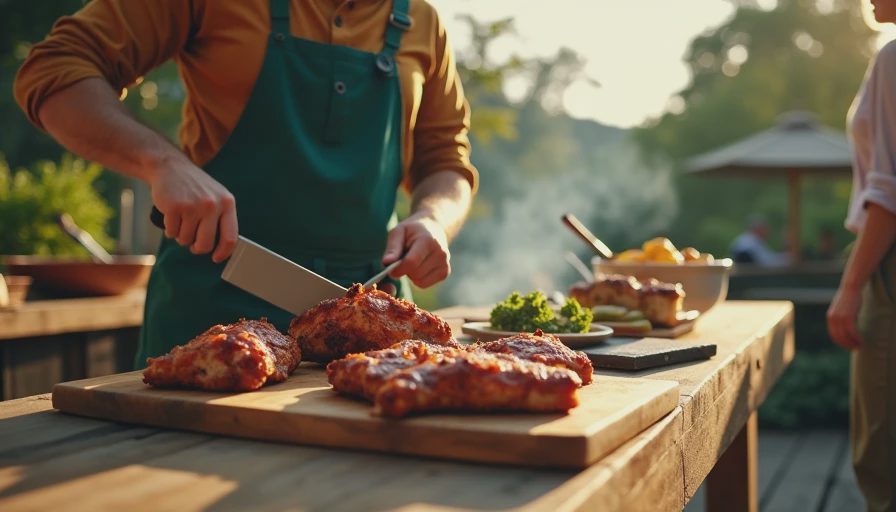
Smoking Pork Belly Burnt Ends Without Drying Them Out
Set the smoker between 250 and 275 degrees Fahrenheit. Either temperature works, but 250 degrees gives you a little more time for smoke and bark, while 275 degrees gets dinner moving faster. Use a mild wood such as apple, cherry, pecan, or a small amount of oak. Heavy smoke for six hours is not a badge of honor. It is how you turn pork into an ashtray.
Arrange the cubes on the grate with space between them. That exposed surface is where the bark develops. Cook until the outside is dark red-brown and the cubes have taken on a firm crust. Depending on the size of the pieces and the cooker, this usually takes two and a half to four hours. Start checking color and texture rather than treating the clock as a commandment.
Internal temperature is useful, but it is not the finish line here. The cubes may be somewhere around 160 to 175 degrees when you move to the next stage, yet tenderness matters more than a single number. If the pork looks pale, give it more time. If the bark is getting too dark while the center is still firm, move the pieces into a covered pan sooner.
The Braise That Makes Them Tender
Transfer the smoked cubes to a disposable foil pan or a sturdy roasting pan. Add a modest amount of liquid and sweetness: barbecue sauce, a splash of apple juice, a few tablespoons of butter, and brown sugar or honey. You can add a little cider vinegar or hot sauce to keep the mixture from tasting flat. The goal is not to drown the pork. You want enough moisture to create a steamy, protected environment while the fat and connective tissue finish rendering.
Cover the pan tightly with foil and return it to the smoker. Cook for about 60 to 90 minutes, then begin testing individual cubes with a toothpick or instant-read thermometer probe. The probe should slide in with very little resistance, like pushing into softened butter. If the pork is still chewy, cover it again and keep cooking in 20-minute intervals.
This is where many batches of pork belly burnt ends go wrong. I once pulled a pan after exactly one hour because guests had arrived, and the cubes looked perfect from across the patio. They were not tender. They were expensive little rubber blocks wearing a beautiful sauce. Appearance tells you when to check; the probe tells you when to finish.
Sauce, Glaze, and the Final Set
When the cubes are tender, uncover the pan and toss them gently with the juices. Taste one before adding more sauce. If the braising liquid is already sweet and salty, use a thin coating of barbecue sauce instead of pouring in half a bottle. A Kansas City-style sauce works beautifully, but a thinner vinegar-forward sauce can balance the fat just as well.
Return the uncovered pan to the smoker for 15 to 30 minutes. This final step lets the sauce tighten around the pork and gives pork belly burnt ends their familiar lacquered finish. Keep the heat near 250 to 275 degrees. At higher temperatures, sugar can scorch before the glaze sets.
For a sharper finish, stir a teaspoon or two of cider vinegar into the sauce. For more heat, add cayenne, your favorite hot sauce, or a pinch of crushed red pepper. I like a glaze that starts sweet, follows with smoke, and ends with enough pepper to make you reach for another piece.
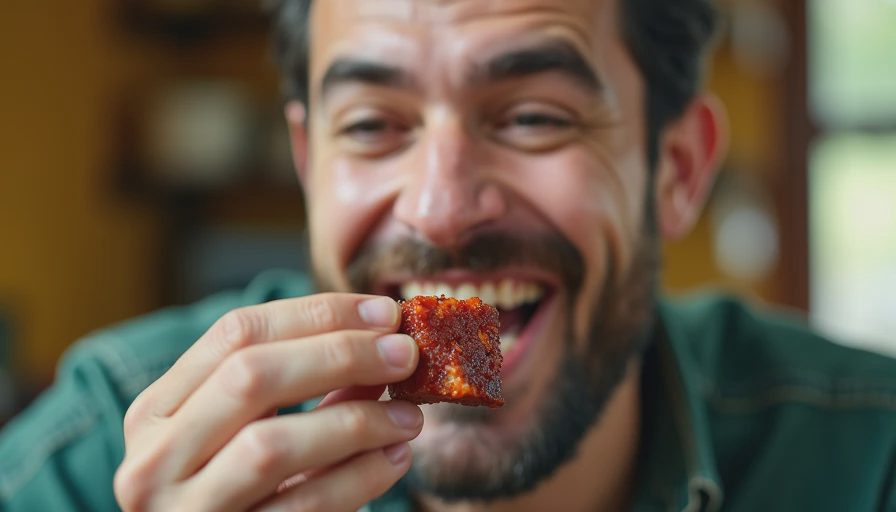
Timing, Temperature, and Serving Tips
Plan on four to six hours from raw pork to finished bites, depending on cube size, smoker stability, and how tender you want them. Pork belly burnt ends hold well for about 30 minutes in a covered pan, which makes them useful for a backyard party. Do not leave cooked pork sitting at room temperature for a long stretch. Keep it hot until serving, and refrigerate leftovers promptly in a shallow container.
Serve them as an appetizer with toothpicks, or use them to build a serious sandwich with pickles and slaw. They also work over baked beans, creamy mac and cheese, grits, or a simple pile of white bread. The richness needs something acidic or fresh nearby. Pickled onions, dill pickles, vinegar slaw, and sliced jalapenos all do the job.
If the finished pieces feel greasy, let them rest uncovered for five minutes before serving and skim excess fat from the pan juices. If they taste too sweet, add pickles or vinegar slaw rather than trying to fix the entire batch with more spice.
Common Mistakes to Avoid
Cutting the belly into tiny cubes is the biggest one. The pieces shrink as fat renders, and two-inch cubes can become much smaller by the time they are tender. Another mistake is cooking only by internal temperature. Pork belly burnt ends need rendered fat and softened connective tissue, so tenderness is the final test.
Using too much smoke is another easy trap, especially on an offset smoker. Clean, light smoke should flavor the meat without leaving a bitter coating. If your smoke looks thick and white, improve the fire before adding the pork. A kettle or pellet grill can produce excellent results when the cooker is stable.
Finally, do not keep lifting the lid. Every peek releases heat and extends the cook. Set a timer, check when the bark should be ready, and trust the process. For your first batch, write down the cut size, pit temperature, wrapping time, and final texture. That is how you turn pork belly burnt ends from a lucky Saturday experiment into a repeatable family favorite.
Pork belly burnt ends reward simple cooking more than expensive gear. Give the pork clean smoke, enough time to tenderize, and a glaze that is sweet, savory, and slightly sharp. Then put the pan on the table before everybody starts asking whether it is ready.



No letters yet — be the first to write.