If you are wondering how long to smoke a pork butt, start with this answer: plan on roughly 1 to 1 1/2 hours per pound at 225 to 250°F, then build in extra time for the stall and the rest. A typical 8-pound pork butt can take 10 to 12 hours, but the clock is only a planning tool. Tenderness decides when dinner is ready.
I learned that lesson the hard way on an old offset smoker in Kansas City. I had a beautiful 9-pound shoulder, a hungry family, and a firm promise that pulled pork would be on the table at 6 p.m. At 5:30, the meat was still tight and chewy. The bark looked perfect, but I had trusted the clock instead of the pork. These days, I start early, keep a thermometer nearby, and protect the schedule with a cooler and a little patience.
The basic timing for smoked pork butt
For a bone-in pork butt, use these estimates at 225 to 250°F. A 4-pound roast usually takes 6 to 8 hours. A 6-pound roast often needs 8 to 10 hours. An 8-pound roast commonly runs 10 to 12 hours, while a 10-pound roast can take 12 to 15 hours. Those ranges include normal cooking time but not always a long rest.
The shape of the roast matters as much as its weight. Two 8-pound butts can finish hours apart if one is thick and compact while the other is long and flat. Bone-in and boneless cuts also cook differently, though both can produce excellent barbecue. A boneless roast often cooks a little more quickly because it is easier for heat to reach the center.
For a backyard meal, I plan for the longest reasonable estimate, then hold the finished pork if it gets done early. Pulled pork can rest wrapped in foil or butcher paper inside an empty cooler for two to four hours. That flexibility is far better than trying to rush a tough roast when guests are already reaching for plates.
What temperature should you use?
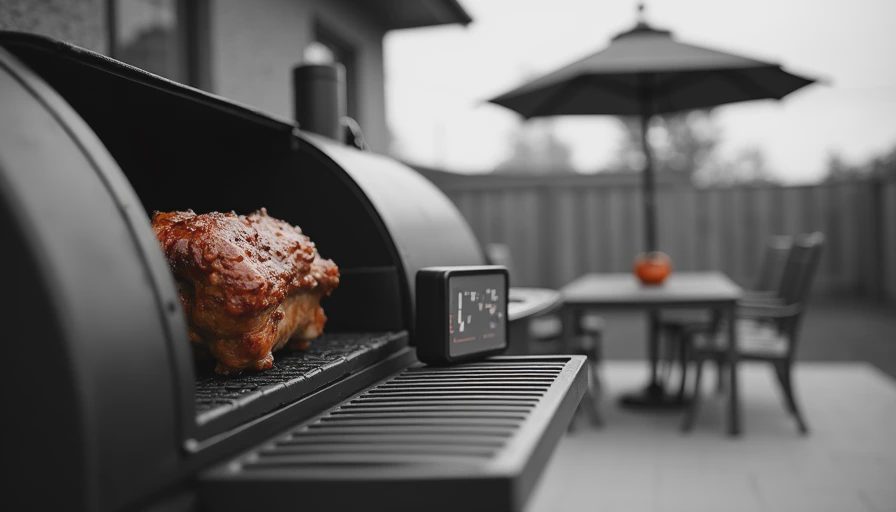
Set the smoker between 225 and 250°F. At 225°F, the cook takes longer and gives the exterior more time to develop smoke and bark. At 250°F, the roast usually finishes sooner without sacrificing tenderness. I use 250°F when I have a firm serving time and 225°F when I am cooking overnight or want a slower pace.
Use a reliable probe thermometer at grate level rather than trusting the dial on the smoker lid. Lid thermometers can read much hotter or cooler than the cooking surface near the meat. Put the probe into the thickest part of the roast, avoiding the bone. A second instant-read thermometer is useful when you begin checking for tenderness.
Smoke flavor comes mostly from the first several hours, while the bark develops through the middle of the cook. You do not need to keep adding wood for twelve hours. Two or three fist-sized chunks of hickory, oak, or apple are enough for many charcoal or offset smokers. Pellet grills handle smoke differently, but the same temperature and tenderness rules apply.
The stall can change your schedule
Most pork butts slow dramatically somewhere around 150 to 170°F internal temperature. This is the stall. Moisture moving through the meat cools the surface, much like sweat cools your skin. The internal temperature can sit nearly still for an hour or several hours, even though the smoker is holding steady.
That pause is normal, not a sign that your fire has failed. If you have time, leave the roast unwrapped and let the bark darken. If dinner is approaching, wrap the butt tightly in foil or unwaxed butcher paper once the bark looks the way you want. Foil pushes through the stall fastest because it traps more steam, while butcher paper preserves a firmer bark.
Wrapping can shorten the cook by one to three hours, but it softens the exterior somewhat. I usually wrap when the bark is deep mahogany and does not wipe away when I touch it. That visual cue is more useful than wrapping at one exact temperature.
How long to smoke a pork butt when it is wrapped
If you wrap at about 160 to 170°F, keep the smoker at 250°F and continue cooking until the roast feels tender. Many pork butts finish between 195 and 205°F internal temperature, but those numbers are not a finish line by themselves. One roast may be ready at 198°F, while another needs to reach 205°F before the connective tissue has softened.
To test it, slide an instant-read thermometer into several parts of the meat. The probe should move through the roast with very little resistance, like pushing into softened butter. If it still feels tight, close the smoker and give it another 30 to 45 minutes. Check again rather than repeatedly opening the lid.
I also use the bone as a clue. On a bone-in butt, the bone should wiggle easily and often pull out cleanly. That test is helpful, but the probe-tender feeling matters most. When people ask how long to smoke a pork butt, I tell them the better question is whether the collagen has melted enough for the meat to pull apart.
Resting and pulling the pork
Resting is not a decorative final step. It lets the juices settle and gives carryover heat time to finish the texture. Once the pork is tender, move it to a pan and keep it wrapped. Let it rest at least 45 minutes; one to two hours is even better for a large roast.
If you use a cooler, fill the empty space around the wrapped pork with clean towels. Do not put loose ice in with the meat. A properly insulated roast can stay hot for several hours, which gives you a useful buffer for late guests, side dishes, or a stubborn final degree of tenderness.
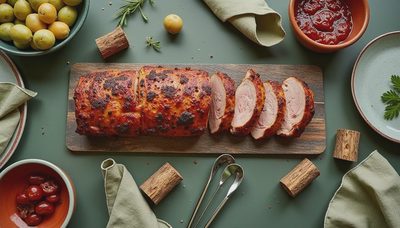
When you pull the pork, remove large pieces of fat and any dry edges, then shred the meat by hand or with forks. Mix bark through the interior so every serving gets smoky, seasoned pieces. Taste before adding sauce. A splash of cider vinegar sauce, a thin Kansas City-style barbecue sauce, or a little of the reserved cooking juice can bring the batch together without hiding the smoke.
A simple schedule that works
For an 8-pound butt served at 5 p.m., put the meat on around 3 or 4 a.m. if you are cooking at 225°F. At 250°F, starting around 5 a.m. may work, but I would still prefer the earlier start. Check the bark and temperature around late morning, wrap if needed, and begin tenderness checks in the afternoon. If the roast finishes early, rest it in a cooler. If it is behind, raise the smoker to 275°F after wrapping; pork butt is forgiving and can handle that adjustment.
The night before, trim only thick exterior fat, apply your favorite rub, and place the pork in the refrigerator. Set up charcoal, pellets, probes, pans, and gloves before bed. A written plan prevents the most common mistake: discovering at sunrise that you forgot fuel or have no clean thermometer batteries.
So, how long to smoke a pork butt? Give yourself about 1 to 1 1/2 hours per pound, but schedule with a generous cushion and finish by feel. Keep the smoker steady, expect the stall, wrap when the bark is ready, and rest the meat properly. Low and slow, and do not overthink it.


No letters yet — be the first to write.