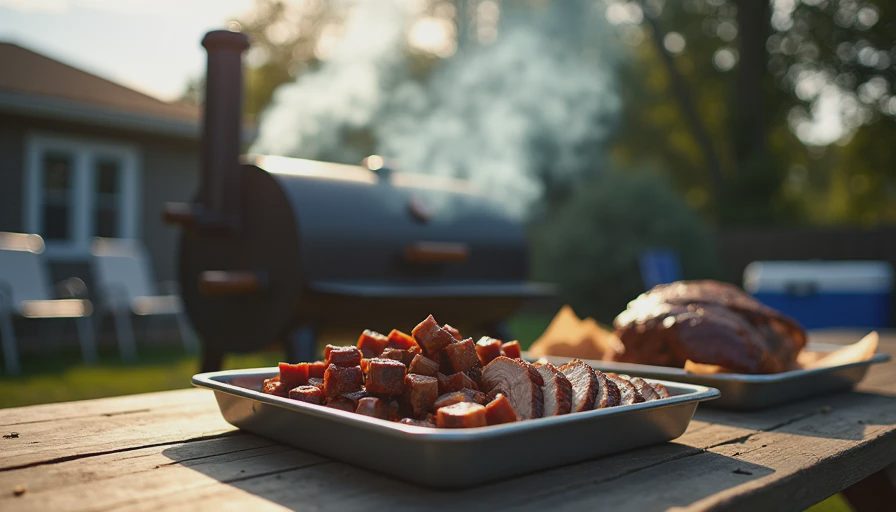
Low and slow, and don’t overthink it.
That’s easy advice when it’s just Kate, the kids, and me on a regular Saturday. It’s a whole different sermon when twenty people are parked in your driveway, the cooler’s already half empty, and somebody just asked if the brisket is “almost ready.”
I’ve been there. More times than my notebook cares to admit. The first time I tried to feed a real crowd from one smoker I treated it like a restaurant rush—panic, extra wood, constant lid lifting, and a final plate that was fine but not great. The second time I treated it like the systems work I used to do in kitchens: plan the flow, stage the meat, and protect the cook’s sanity. That version worked. The people left full and I still had enough energy to sit down with a cold drink instead of collapsing in a lawn chair.
This is that second version. No magic. No $3,000 extra smoker. Just the one you’ve already got and a plan that respects both the meat and the person running it.
The Math That Actually Matters
Twenty people does not mean twenty pounds of finished meat. It means enough so the last person still gets a proper plate and nobody starts side-eyeing the empty tray.
My working numbers for a mixed backyard crowd:
Brisket or pork butt as the main: plan ½ pound cooked weight per person if there are solid sides. Bump to ¾ pound if the crowd skews heavy or the sides are light.
One solid packer brisket (12–14 lb raw) plus one large pork butt (8–10 lb raw) will comfortably cover twenty with leftovers for the brave.
Ribs if you want them: two full racks are a nice bonus, not a requirement.
Burnt ends from the point: they disappear first, so protect a portion or make extra.
The smoker itself only needs to hold the meat in a single layer or with smart stacking. An offset, a decent pellet, or even a large kettle can do this. The limiting factor is almost never the cooker. It’s the cook’s decision-making under social pressure.
Timeline That Leaves You Room to Breathe
I work backward from the moment I want food on the table. For a 5 p.m. sit-down, here’s the skeleton that has saved me more than once.
Two days out
Confirm the guest count. Thaw the meat in the fridge. Mix the rub. Make the sauce if you’re using homemade. Write the rough timeline in the notebook so it’s not floating in your head.
Day before
Trim if needed. Season. Wrap and refrigerate. Prep any sides that hold well—beans, slaw, cornbread batter. Charge the thermometer batteries. Check wood or pellets.
Cook day – early morning
Light the fire or start the pellet grill while the coffee is still hot. Get the meat on when the cooker is stable. For brisket and pork butt I usually aim to have them on by 7 or 8 a.m. for a late-afternoon finish. The exact start time depends on your cooker and the weather, which is why the notebook still gets the weather line every time.
Midday
Once the meat is on and the temps are steady, walk away. Check every 60–90 minutes, not every 15. Use the time to set up tables, ice the drinks, and actually talk to the early arrivals instead of hovering over the firebox.
Final stretch
When the meat hits probe-tender, pull it, wrap if it needs a rest, and hold it in a cooler or low oven. This is the part most backyard cooks skip and then pay for. A proper rest turns “pretty good” into “why is this so much better than last time.”
The Staging Trick That Keeps the Smoker Honest
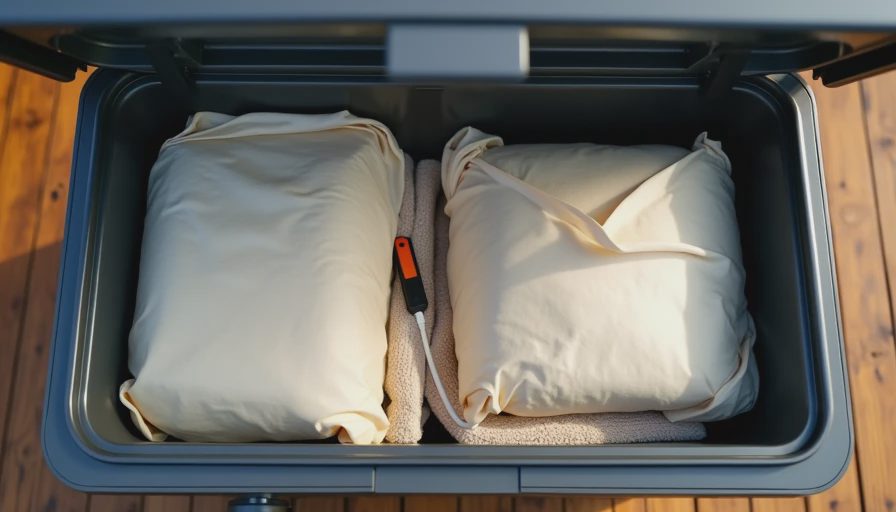
One smoker can only do so much at once. The move is to finish proteins at different times and hold the early ones.
I usually run the pork butt a little ahead of the brisket because it is more forgiving on the hold. Once it’s tender I wrap it tight, towel it, and park it in a dry cooler. It will stay hot and happy for hours. The brisket comes off next, rests, and gets sliced closer to serving time. If I’m doing ribs they go on last or share space once the big cuts are in the hold phase.
Burnt ends get their second cook right before service so they stay sticky and dramatic. That tray becomes the “wow” item that buys you goodwill while you finish the rest of the slicing.
Sides and the Art of Not Cooking Everything Yourself
You are allowed to accept help. In fact you should demand it.
I tell people: bring a side or bring drinks. The ones who show up empty-handed still get fed, but the ones who bring something take real pressure off the host. My go-to list that works with one smoker:
Beans that can sit on the edge of the cooker or in a slow cooker
A big vinegar slaw that cuts the rich meat
Cornbread or store-bought rolls (nobody has ever complained about warm rolls)
Pickles and onions for the burnt ends tray
Kate usually handles the dessert or the fresh stuff. I stay on the meat. That division of labor is the difference between a host who is present and a host who is a short-order cook in his own backyard.
Crowd Control Without Being a Jerk
People will ask “is it ready yet” starting about three hours too early. Have a stock answer ready. Mine is some version of “It’s on schedule—grab a drink and I’ll call you when the tray hits the table.” Most folks are fine with that if you sound calm.
Kids will circle the smoker like sharks. Colt and Sadie learned early that the pit area has a boundary. A simple “outside the chairs” rule keeps little hands away from hot metal without turning the day into a lecture.
And when the first tray goes out, serve it family-style or from a central station. Passing plates one by one turns you into a waiter. Let people build their own and come back for more. The food disappears faster and you get to sit down sooner.
What I Still Get Wrong (So You Don’t Have To)
I still occasionally under-estimate how fast burnt ends vanish. I still sometimes forget to put a spare thermometer probe in the hold cooler. And every now and then I let the social energy pull me into lifting the lid too many times. The notebook has the receipts.
The fix is always the same: protect the plan more than the performance. The meat does not care how many people are watching. It only cares about temperature and time. Your job is to give it both while still being a human who can laugh at a bad joke and hand somebody a napkin.
The Real Win
Feeding twenty from one smoker is not a flex. It’s a party. The point is not that you pulled it off alone like some barbecue superhero. The point is that people left full, the host is still conscious, and somebody already asked when you’re doing it again.
That is the whole game.
So light the fire early, stage the meat, accept the sides, and protect your own calm. The smoker will do the rest if you let it.
Low and slow, and don’t overthink it.
Especially when the driveway is full.


No letters yet — be the first to write.