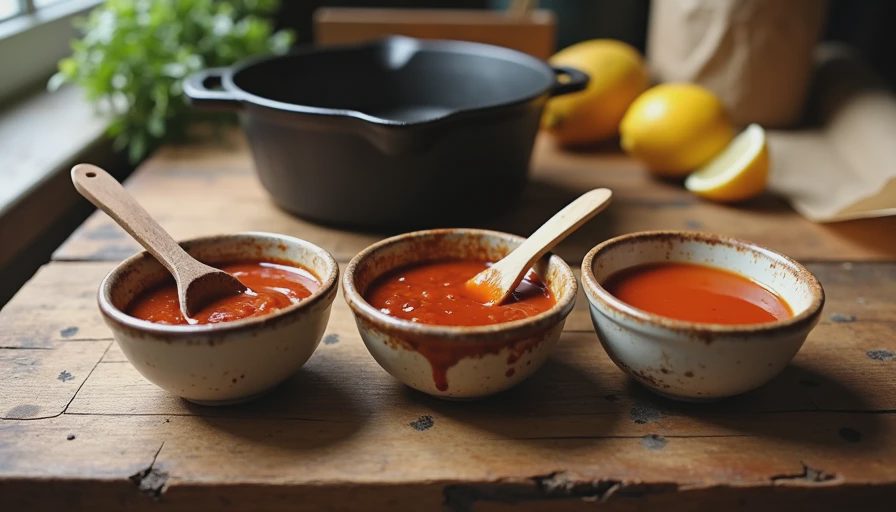
I used to think you needed a different sauce for everything.
Brisket needed a thick, peppery sauce. Ribs needed something sticky and sweet. Pulled pork needed a vinegar-based dip. And don't even get me started on the "competition sauce" vs. "table sauce" debate. I had a whole shelf in my fridge dedicated to bottles with fancy labels. Some were store-bought. Some were homemade. Most of them went bad before I finished them.
Then I met an old pitmaster from Memphis at a competition who changed my mind. He had one sauce. Just one. He used it on everything. And his ribs took second place that day.
His philosophy was simple: "If your sauce needs to be different for every meat, your meat isn't good enough."
That stuck with me. So I went home and spent a year perfecting a single sauce recipe that works as a table sauce, a glaze, and a dip. I've been using it for ten years now, and I haven't bought a bottle of BBQ sauce since.
The Base Recipe
This is the sauce I make in big batches and keep in the fridge for weeks. It's balanced, versatile, and dead simple.
Beau's One-Sauce-Fits-Most Recipe:
2 cups ketchup (I use Heinz, but whatever you like)
½ cup apple cider vinegar
½ cup brown sugar (light or dark, doesn't matter)
¼ cup molasses
2 tablespoons yellow mustard
1 tablespoon Worcestershire sauce
1 teaspoon garlic powder
1 teaspoon onion powder
1 teaspoon smoked paprika
½ teaspoon cayenne (or more if you like heat)
Salt and black pepper to taste
Combine everything in a saucepan over medium heat. Stir until the sugar dissolves and it starts to bubble. Turn the heat down to low and let it simmer for about 20 minutes. Stir occasionally so it doesn't scorch on the bottom. That's it. That's the whole recipe.
You can use it right away, but it gets better after a day or two in the fridge. The flavors meld together, and the vinegar mellows out. I usually make it on a Sunday and use it all week.
Way One: The Table Sauce
This is the version you put in a squeeze bottle and leave on the table. It's the ketchup of barbecue. People can add as much or as little as they want, and it won't overpower the meat.
For a table sauce, I keep the recipe as-is. It's tangy from the vinegar, sweet from the sugar, and has just enough heat from the cayenne to remind you it's there. The texture is thin enough to pour easily but thick enough to stick to a piece of brisket.
My kids, Colt and Sadie, use it on everything. They've been known to put it on chicken nuggets, scrambled eggs, and once, to Kate's horror, on ice cream. I've learned to keep a separate bottle just for the kids so the adult version lasts longer.
The beauty of a table sauce is that it doesn't compete with the meat. It complements it. If your brisket is good, the sauce just enhances the flavor. If your brisket is dry, the sauce can rescue it. It's forgiving, and that's exactly what you want when you're feeding a crowd.
Way Two: The Glaze
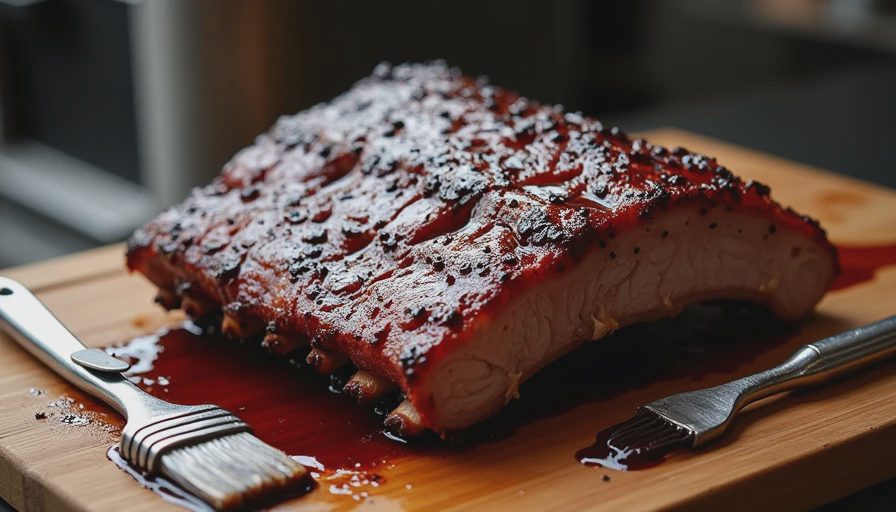
This is where things get interesting. To turn this sauce into a glaze, you reduce it.
Take the finished sauce and pour it into a smaller saucepan. Simmer it on low heat, stirring constantly, until it thickens and reduces by about a third. It should get sticky enough to coat the back of a spoon. This is the version you brush on ribs, chicken wings, or pork belly during the last 15 to 20 minutes of the cook.
I learned this from a competition cook in Kansas City who swore by glazing his ribs three times in the last half hour. He'd brush on a thin layer, let it set, brush on another, let it caramelize, and do it one more time. The result was glossy, sticky ribs that looked like they belonged on a magazine cover.
The glaze is also great for finishing brisket. I don't always use it on brisket, because I prefer a more classic Texas approach, but when I do, I brush it on right before I wrap the brisket in butcher paper. It adds a layer of flavor and color that's hard to beat.
One quick tip: if you're going to glaze, keep your smoker temperature steady. Sugar burns quickly, and if your fire spikes, that beautiful glaze turns into a bitter, charred mess. I learned that lesson the hard way at a competition in Oklahoma. My ribs looked great coming off the smoker, but they tasted like burnt caramel. The judges were not impressed.
Way Three: The Dip
The dip is the zingy, vinegar-forward version of the sauce. It's what you serve alongside fried pickles, smoked sausage, or brisket burnt ends. It cuts through the richness of the meat and wakes up your taste buds.
To make the dip, take the base recipe and add an extra ¼ cup of apple cider vinegar and a squeeze of fresh lemon juice. You want it thinner and sharper than the table sauce. Some people add a little more cayenne for heat, but I keep it moderate.
This version is perfect for dipping. It's also great for drizzling over pulled pork sandwiches. The vinegar cuts the richness of the pork, and the acid brightens up the whole sandwich. Kate loves this version. She's not a big sauce person, but she'll use the dip on almost everything.
I also use this version as a marinade for chicken thighs. I'll pour a cup of it over a pack of boneless, skinless thighs, let them sit in the fridge for a few hours, and then grill them. The vinegar breaks down the meat, and the sugar helps with caramelization. It's a quick dinner that feels like you put in way more effort than you actually did.
Why One Sauce Works
You might be thinking, "Why would I make one sauce when I could make three or four?" And that's a fair question. But here's why I stick with one.
First, simplicity. When you're cooking for a crowd, you don't want to manage six different sauces. You want to focus on the fire, the meat, and the timing. One sauce in three variations takes the mental load off.
Second, consistency. When you master one recipe, you can make it in your sleep. You don't have to wonder if you added enough sugar or too much vinegar. You know the flavor. You trust it. And trust is everything in barbecue.
Third, it forces you to cook better meat. If your sauce is covering up bad meat, you'll never know your brisket could be better. But when you have a single sauce that's balanced and subtle, you can taste the smoke, the rub, and the meat. It's honest. And honesty makes you a better cook.
The Takeaway
So here's my recommendation: stop buying six different bottles of sauce. Stop experimenting with recipes that use 27 ingredients. Start with one. Make it your own. And then figure out how to use it three different ways.
Master the table sauce, the glaze, and the dip. That's all you need. Everything else is just noise. Low and slow, and don't overthink it.

No letters yet — be the first to write.