Smoked tri tip is one of the best ways to get a big barbecue payoff without spending all day babysitting a brisket. This triangular cut from the bottom sirloin is beefy, relatively affordable, and usually ready in four to six hours. It also teaches the most important barbecue lesson: temperature matters more than the clock. I have cooked tri tip on an offset, a pellet grill, and a kettle, and the winning method is pleasantly simple. Low and slow, and don't overthink it.
Choosing and preparing the beef
Look for a tri tip weighing between 2 and 3 pounds with a reasonably even shape. A thick fat cap is not necessary, but a thin layer of external fat can protect the surface during the cook. Trim away hard, waxy fat and any silver skin, which will not soften enough to make pleasant eating. Leave about one-eighth inch of soft fat if the cut has it.
For smoked tri tip, I use a straightforward seasoning mix: kosher salt, coarse black pepper, garlic powder, and a little paprika for color. Apply the rub at least 30 minutes before cooking, or refrigerate the seasoned roast overnight on a rack. That rest gives the salt time to work into the meat instead of sitting on the surface. If your tri tip came pre-seasoned, skip the extra salt and add only pepper or garlic.
You can also use a store-bought beef rub. Kinder's Woodfired Garlic, Meat Church Holy Cow, and a basic Montreal steak seasoning can all work well. The goal is a savory crust, not a thick candy coating. Sugar-heavy rubs can darken quickly during a longer smoke, especially on a charcoal grill.

Building the smoke
Set your smoker for 225 to 250 degrees Fahrenheit. Oak is my first choice because it gives beef a clean, sturdy smoke flavor. Hickory works too, but use a lighter hand if your cooker produces heavy smoke. A couple of fist-sized chunks in a charcoal grill are plenty; you do not need to bury the fire in wood.
Put the tri tip on the grate with the thicker end toward the hotter side of the cooker. If your smoker has a known hot spot, this simple positioning helps the thinner end avoid drying out. Insert a probe into the thickest part, staying away from fat pockets. Close the lid and leave it alone for a while. Opening the cooker every 20 minutes to admire the bark only dumps heat and extends the cook.
Smoke until the internal temperature reaches about 115 to 120 degrees for a final medium-rare result after searing. That commonly takes three to five hours, but thickness, weather, and your smoker's accuracy matter more than the estimate. A reliable thermometer such as a ThermoWorks Smoke or ThermoPro is far more useful than guessing from appearance.
When to sear and when to rest
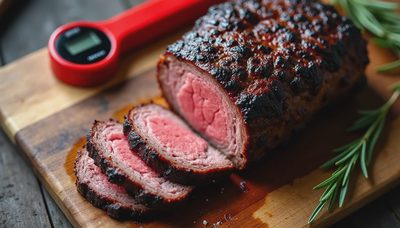
The best smoked tri tip usually gets a hot finish. Once the roast reaches the target smoking temperature, remove it and raise the cooker to 450 degrees, or heat a cast-iron skillet or gas grill as hot as you safely can. Sear each broad side for about 60 to 90 seconds, then check the internal temperature. Pull the roast around 130 to 135 degrees for medium-rare, or closer to 140 degrees for medium.
That temperature will continue rising slightly while the meat rests. Place the tri tip on a cutting board and let it rest for 15 to 20 minutes, loosely covered with foil. Do not wrap it tightly right away; trapped steam can soften the bark you worked to build. Resting gives the hot juices time to redistribute, so they stay in the slices instead of flooding your cutting board.
I learned this the hard way at a family cookout. I rushed a roast from the grill to the knife because everyone was hungry, and the first slices left a puddle of juice behind. The meat still tasted good, but it was noticeably less juicy. Fifteen quiet minutes is a cheap insurance policy.

Slicing smoked tri tip correctly
Tri tip has grain running in two different directions, which is the detail that catches many first-time cooks. Before seasoning, look closely at the raw roast and notice where the muscle fibers run. You can also make a shallow mark in the surface with your knife. After cooking, cut the roast roughly in half where the grain changes direction, then slice each section across the grain.
Use a long, sharp slicing knife and aim for pieces about one-quarter inch thick. Thinner slices are tender and easy to serve in sandwiches; slightly thicker slices feel more like steak. If a slice seems chewy, turn the remaining piece and check the grain rather than blaming the smoker. Even perfectly cooked beef can seem tough when sliced with the fibers instead of across them.
Serve it with Kansas City-style barbecue sauce on the side, not poured over the whole roast. A little sauce lets the smoke and beef flavor stay in charge. Pickles, toasted buns, grilled onions, baked beans, and a sharp vinegar slaw round out the plate without requiring another complicated recipe.
A simple plan for different smokers
On a pellet grill, set 225 degrees and use oak or a competition-style blend. Pellet cookers provide steady heat, so the main job is monitoring the internal temperature. On an offset smoker, keep the fire small and clean. Thin blue smoke is a better target than thick white clouds, which can make the exterior bitter. Add a small split or chunk only when the previous one has mostly burned down.
For a kettle grill, bank charcoal on one side and place the tri tip on the opposite side over indirect heat. Add one or two wood chunks, then adjust the vents until the grate settles near 235 degrees. A disposable aluminum pan with a little water can help stabilize the temperature, but it is not mandatory. The same approach works on a gas grill if you place a foil packet of wood chips over a burner and cook the beef away from direct flame.
Common mistakes worth avoiding
The first mistake is cooking by time alone. A 2-pound roast and a 3-pound roast can finish far apart, and cold wind can change a charcoal cook dramatically. Use time as a planning tool, then trust the thermometer. The second mistake is slicing immediately. The third is over-smoking a small cut. Tri tip does not need twelve hours of smoke; several hours at clean heat gives it plenty of flavor.
Another common problem is taking the roast too far before the sear. If the meat is already 135 degrees in the smoker, the hot finish can push it into medium or beyond. That is not ruined beef, but it is not the rosy center most people want. Pull earlier, sear quickly, and remember that the roast will carry over during its rest.
For smoked tri tip that turns out dry, write down the cook in a notebook: starting weight, smoker temperature, internal pull temperature, wood, and rest time. My spiral notebook has plenty of bad entries, including one roast I forgot during a Little League practice. Those notes make the next cook better instead of leaving you to guess.
Your next backyard cook
Plan on roughly 30 minutes of preparation, three to five hours of smoking, a quick sear, and a 15-minute rest. That makes smoked tri tip a realistic Saturday dinner rather than an all-day project. Buy the beef, season it simply, set up the cooker, and keep one dependable thermometer nearby.
If you are feeding six people, two tri tips are often easier to manage than one enormous roast. Cook them together, but judge each one separately because their shapes can differ. Save leftovers for tacos, steak sandwiches, breakfast hash, or chopped beef over fries. A good roast can cover several meals without tasting like leftovers.
The method is forgiving, the equipment can be basic, and the payoff is restaurant-quality beef at home. Keep the fire clean, pull at the right temperature, slice across the grain, and let the meat rest. That is the whole game with smoked tri tip.



No letters yet — be the first to write.