BBQ for a crowd sounds like a big production until you break it into meat, timing, and service. I have cooked for restaurant shifts, competition turn-ins, and plenty of backyard guests who arrived hungry an hour early. The secret is not owning a $3,000 smoker. It is building a plan that gives the meat room to finish and gives you room to breathe. Low and slow, and don't overthink it.
Start with the guest count and the right portions
For BBQ for a crowd, plan on about half a pound of raw meat per adult when you are serving several sides. That usually leaves a comfortable portion after cooking losses. For a mixed group with children, lighter appetites, or lots of desserts, one-third to two-fifths of a pound per person is often enough. If barbecue is the whole meal and your guests are serious eaters, move closer to two-thirds of a pound.
A 12-pound brisket may finish around 7 to 8 pounds after trimming and cooking, so it can feed roughly 14 to 18 people with sides. A rack of spare ribs generally serves three to four adults, depending on how meaty the rack is and what else is on the table. Pulled pork is forgiving: an 8-pound bone-in shoulder can produce about 4 to 5 pounds of finished meat, enough for 12 to 16 sandwiches.
Write down the number of adults, children, vegetarians, and big eaters before buying anything. Then add about 10 percent if you want leftovers. Leftover pulled pork becomes tacos, nachos, breakfast hash, or freezer meals, so a little extra is far more useful than running out during the second round.
Choose a menu that shares the smoker
The easiest BBQ for a crowd uses one main meat and one supporting meat rather than three meats competing for space and attention. Pulled pork and chicken thighs are a dependable pairing. The pork handles a long cook, while the thighs can go on later and finish in roughly 60 to 90 minutes. Brisket and sausage work well too, especially when the sausage goes on during the final hour.
Ribs are delicious, but they demand more hands-on timing than pork shoulder. If you serve ribs, add pulled pork as insurance. Ribs can finish early and rest in a covered pan, while pork shoulder can hold for hours without losing quality. I learned this after once cooking ribs for a family reunion and discovering that everyone wanted to eat before the ribs had developed the texture I wanted. The pork saved lunch.
Keep the rub simple. Kosher salt, coarse black pepper, paprika, garlic, and a little brown sugar will cover most backyard cooks. Put sauce on the table instead of drowning the meat before serving. That lets guests choose a sweet Kansas City-style sauce, a thinner vinegar sauce, or no sauce at all.
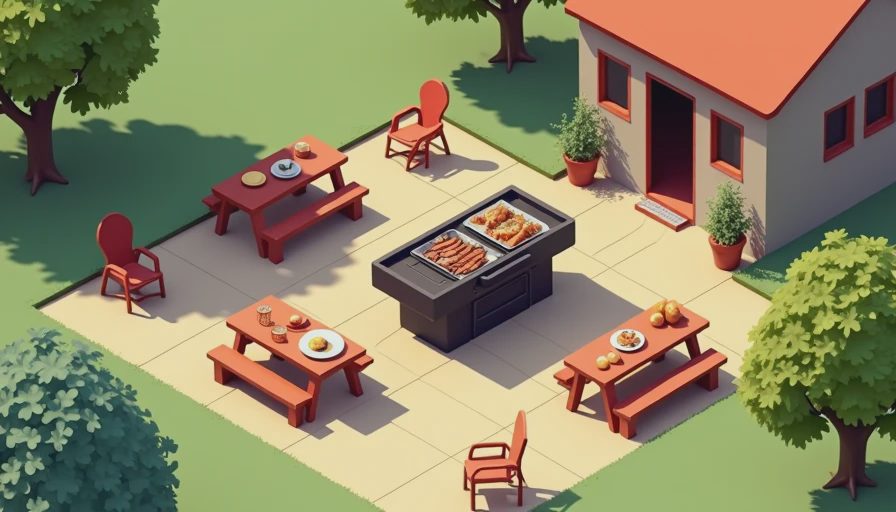
Build the schedule backward from dinner
For BBQ for a crowd, dinner time is the fixed point. Work backward from there, then add a holding window. If you want to eat at 5:00 p.m., aim to have large cuts finished by 2:30 or 3:00. A pork shoulder wrapped at the stall may take 8 to 10 hours at 250 to 275 degrees Fahrenheit, while a brisket can take longer and varies more from one piece to another. The clock is a guide; tenderness is the final test.
Put the main cut on the night before when practical. Use a reliable probe thermometer and check that the smoker is holding a steady temperature. When the meat reaches the mid-160s, it may slow as moisture evaporates. Wrapping in butcher paper or foil can shorten that stall, though unwrapped meat often develops a firmer bark.
Start earlier than your first estimate. Meat can rest in a dry cooler wrapped in towels for two to four hours, or it can stay warm in a low oven if the temperature remains safely above 140 degrees. An early finish is a gift. A late finish is a driveway full of guests asking whether the brisket is ready yet.
Make the smoker work like a small kitchen
You do not need identical equipment for BBQ for a crowd. An offset smoker, pellet grill, ceramic cooker, kettle grill, or even two standard grills can do the job. The important questions are capacity, fuel, and temperature control. Leave space around each cut so heat and smoke can circulate. Crowding creates cool spots and makes bark develop unevenly.
Put a water pan near the heat source if your cooker runs dry or hot. It can moderate temperature swings and add humidity, but it will not rescue a badly managed fire. On an offset smoker, burn clean wood with a small, hot fire instead of smoldering logs. White billowing smoke usually means poor combustion; thin, barely visible smoke is what you want.
Use two thermometers if possible: one for the grate and one for the meat. The built-in dial on a grill lid can be far away from the cooking surface. Check fuel before guests arrive, fill an extra propane tank, and keep charcoal, wood, foil, gloves, and a sharp slicing knife within reach.
Plan sides, sauces, and serving space
A strong BBQ for a crowd needs sides that can wait. Slaw, baked beans, potato salad, pickles, cornbread, and macaroni salad can be prepared ahead. Keep cold foods chilled until serving and place hot foods in covered pans or insulated carriers. Do not make every side on the same day as the meat; that is how a pleasant cookout turns into a kitchen emergency.
For a group of 20, two large pans of sides plus a bowl of slaw and plenty of buns will usually create a generous spread. Put sliced pickles, onions, sauce, and extra napkins at the end of the serving table so the line keeps moving. Slice only what you expect to serve in the first round. Keeping the rest of the brisket or pork whole helps it retain moisture.
If you are serving sandwiches, estimate one bun per person plus a handful of extras. Label sauces if one is spicy. A small sign that says “hot sauce” prevents a six-year-old from turning a pulled pork sandwich into a fire drill. My daughter Sadie taught me that lesson once, and I have not forgotten it.
Avoid the mistakes that ruin a big cook
The first mistake in BBQ for a crowd is buying meat based only on raw weight. Trim, bones, and cooking loss matter. The second is trusting a target temperature more than feel. A pork shoulder is ready when a probe slides in with little resistance, often somewhere around 195 to 205 degrees. Brisket may finish in a similar range, but every cut has its own schedule.
Another problem is slicing too soon. Resting lets juices redistribute and gives collagen time to settle. Cut a brisket immediately and the board can fill with juice that should have stayed in the slices. Finally, do not keep opening the lid to admire progress. Each peek loses heat and extends the cook.
My simple system is written in a spiral notebook: guest count, meat weights, smoker temperature, wrap time, finish time, and what went wrong. That record makes the next cook easier. For your first BBQ for a crowd, choose forgiving pork shoulder, start early, and reserve your ambition for the seasoning and the people at the table. The best cookout is the one where the food is hot, the pitmaster sits down, and nobody has to order pizza.

No letters yet — be the first to write.