I'm going to let you in on a dirty little secret.
I have burned more food in my own backyard in the last three years than I ever did in a twelve-year restaurant career.
Let that sink in. I ran kitchens where we served hundreds of covers a night. I had systems. I had checklists. I had a team of line cooks who could grill a mid-rare steak in their sleep. I was good at it.
But the day I brought home my first offset smoker — a beat-up Oklahoma Joe from Facebook Marketplace for $150 — all of that restaurant logic went out the window. I was standing in my driveway at 2 a.m. with a pork butt 40 degrees short of target and a fire that had gone out twice, wondering if I'd made a terrible life choice.
That's the thing about cooking at home versus cooking for a living. In a restaurant, you have a ticket rail, a timer system, and a head chef who screams at you when you screw up. At home? You have a wife grading science tests, two kids asking if dinner's ready every six minutes, and a smoker doing its own thing. The systems that made me a successful restaurant manager? They work against me out here.
So here are the biggest mental shifts I'm still struggling with. Low and slow, and don't overthink it.
The Tyranny of the Schedule
In a restaurant, speed is the metric. Everything is about getting food out fast.
You can guess where this goes wrong. My first brisket, I had a dinner party scheduled for 6 p.m. I did the math. Started the fire at 11 p.m. Meat on by midnight. "Easy," I thought. "I've got this timed to the minute."
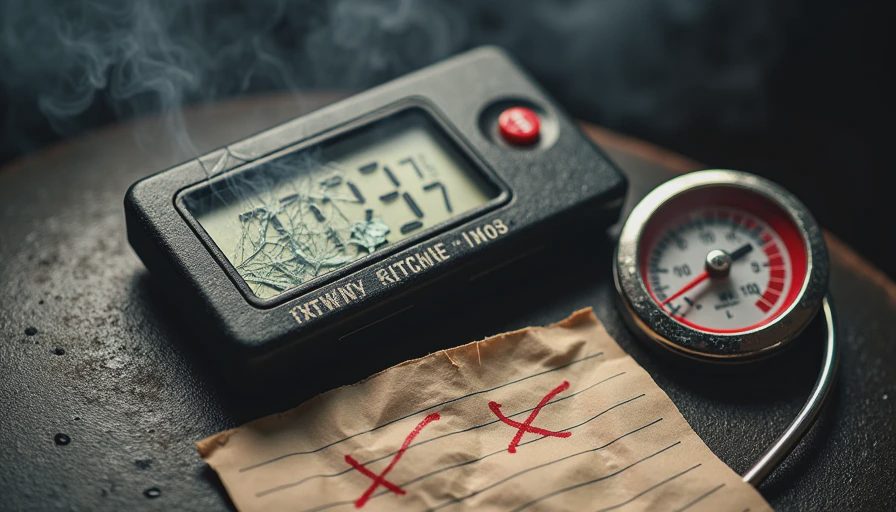
At 2 p.m. the next day, the brisket hit the stall at 160 degrees and just… stopped. For three hours. I started pacing. I checked the thermometer every ten minutes. I panicked. In a restaurant, you expedite. But with a brisket, you can't. There is only patience.
At 4 p.m., I did the stupidest thing I've ever done. I cranked the heat from 250 to 325. The brisket came off at 5:30. I rested it for maybe 20 minutes — I was in a hurry — and sliced into it. Tough. Dry. Tasted like shoe leather. My wife, Kate, tried to be nice, but I saw her face. Twelve years of experience, and I served my family a $70 piece of beef that was worse than gas station jerky.
The lesson? The meat doesn't care about your dinner plans. Cook to temperature, not to a clock.
The $150 Facebook Marketplace Smoker
In a pro kitchen, you buy what works. Top-of-the-line Vulcan griddles. Rational ovens. You don't mess with budget gear. So my instinct was to buy a $2,500 Lang offset.
But then I looked at that $150 Oklahoma Joe. "If I mess this up, I'm only out $150." Best decision I've made.
That cheap smoker taught me more about fire management than a high-end smoker ever could. Thin metal. Leaks smoke. Won't hold temp worth a damn. You have to baby it. You have to learn to read the fire, adjust the damper, position the logs just right. Had I bought the $2,500 smoker, I'd have been lazy. With the cheap one, I was forced to become a better cook.
I tried the restaurant method of "set it and forget it" on that cheap smoker. Left it for 20 minutes to help Colt with homework. Came back to a 180-degree firebox. Panicked. Threw in charcoal and a huge oak split. Temperature shot to 400. Ribs charred outside, raw inside. In a restaurant, I'd have thrown them away. At home, we ate them anyway — and I learned you can't leave a cheap smoker unattended.
"Restaurant Good" vs. "Tuesday-Night Good"
In a restaurant, good is a standard. A steak is seared to medium rare. If it's not perfect, it doesn't go out.
At home, I spent my first year obsessing over details nobody noticed. Smoke ring. Bark texture. I took photos of brisket slices to send to friends for approval. I treated every cook like a KCBS competition. It made me miserable. It made my family miserable. I was so obsessed I wouldn't even sit down to eat with them.
Then, one Tuesday night, I just got tired. Kids were losing their minds. Kate was grading papers. I slapped a cheap pork shoulder on the smoker, didn't even measure the rub — just salt, pepper, brown sugar — and let it ride. Didn't wrap it. Didn't spritz it. Didn't check it for three hours.
And you know what? It was delicious. Not competition-worthy. Bark wasn't pristine. Smoke ring was barely there. But it was tender, juicy, and made my family happy. Kate looked at me and said, "I like this version of you better. The one who actually eats with us."
That's "Tuesday-night good." Food that's good enough for the people you love. Not perfect. Not winning a trophy. But real.
The Notebook: A Confession
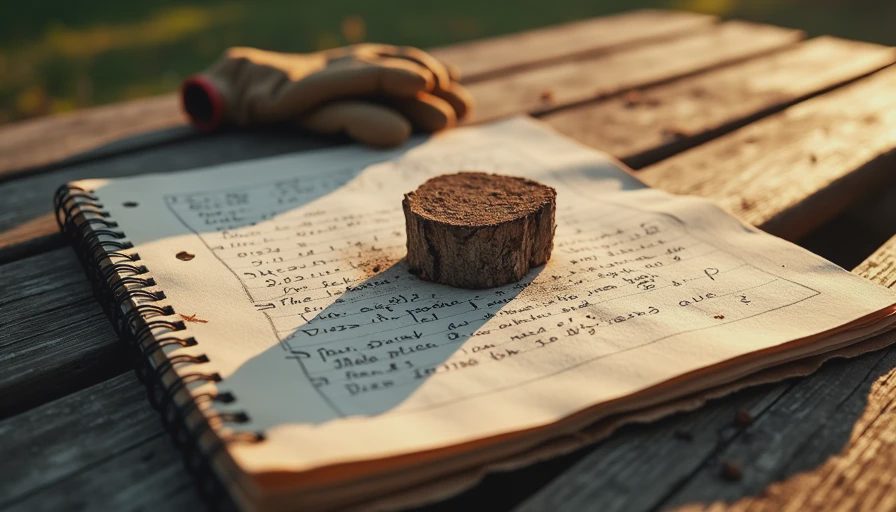
I keep a spiral notebook of every smoke. Date, weather, meat, wood, temp, time, and — most importantly — what went wrong. I'm a systems guy. I like data.
I started it thinking I could make barbecue a scientific, repeatable process. But the notebook is more of a morale manager than a scientific log. Here's an entry: "The wind shifted. The fire spiked. I didn't open the door. I just knew it was going to be bad." That's not science. That's a eulogy.
What I learned had nothing to do with numbers. Competition cooking is about handling pressure. When the wind shifts, you don't panic. You adjust the vent. You add a split of wood. You take a breath and trust the process.
I still keep the notebook. But now I use it as a cookbook of my own failures. It reminds me I survived those mishaps. It's not about eliminating failure. It's about failing forward.
You Can't Win Arguments with Fire
In a restaurant, you can often get by with brute force. Sauce too thin? Reduce it. Steak overcooked? Slice it thin for a salad. You have workarounds.
In the backyard, with a 200-degree offset and a 15-pound brisket, you have to accept what the fire gives you. You can't negotiate. You can't force it. All you can do is set the conditions for success and get out of the fire's way.
I tried to micromanage my smoker. Adjusted dampers every ten minutes. Moved wood splits like a madman. I was wrong. The best thing you can do is observe. Watch the smoke. Feel the wind. Listen to the fire. Make small adjustments, then give it time. Give the fire a chance to stabilize. Sometimes, the fire wins. And that's okay.
The Takeaway
What have I learned? I still overthink. I still get impatient. I still let the schedule take over. But my biggest enemy isn't the meat, the fire, or the gear. It's my own brain.
My restaurant brain thinks in checklists. My backyard brain is learning to think in observation and patience. It's slower. Less efficient. More rewarding.
You don't need to be perfect. You don't need a $3,000 smoker. You don't need to wake up at 3 a.m. You just need to be present, pay attention, and be willing to screw up. Eat your mistakes. Learn from them. Try again next weekend.
Because at the end of the day, it's just barbecue. Meant to be shared, enjoyed, and laughed about. Grab a beer, light a fire, and don't overthink it.

No letters yet — be the first to write.