A thermometer for smoker cooking is not fancy gear; it is how you stop guessing what is happening inside the pit and inside the meat. I learned that after serving a brisket that looked gorgeous, sliced cleanly on the outside, and chewed like a boot. The smoker temperature had drifted for hours while my bargain dial sat there confidently telling me everything was fine. Low and slow, and don't overthink it, but do measure the important stuff.
The right setup helps you manage two separate temperatures: the air around the food and the internal temperature of the food itself. Once you can see both, you can adjust vents, add fuel, wrap at the right time, and pull dinner before it dries out.
What a thermometer for smoker cooking actually needs to measure
A useful thermometer for smoker cooking should handle a hot, smoky environment and give you a dependable reading without making you open the lid every 20 minutes. Opening the lid dumps heat and extends the cook, especially on a small offset or charcoal kettle.
Look for at least one probe that measures meat and a separate reading for the cooking chamber. A dual-probe unit often costs around $25 to $60 and is plenty for ribs, pork shoulder, chicken, and the occasional brisket. Wireless models with several probes commonly run from $60 to $150. They are convenient, but extra range and phone connectivity do not automatically mean better accuracy.
Probe quality matters more than a colorful screen. Stainless-steel probes should have a thin tip, a heat-resistant cable, and a connection that does not wiggle when you move the lid. If you cook overnight, a backlit display or receiver is genuinely useful. If you only smoke on Saturday afternoons, a simple instant-read thermometer plus a reliable pit probe can save money.
Where to place your probes
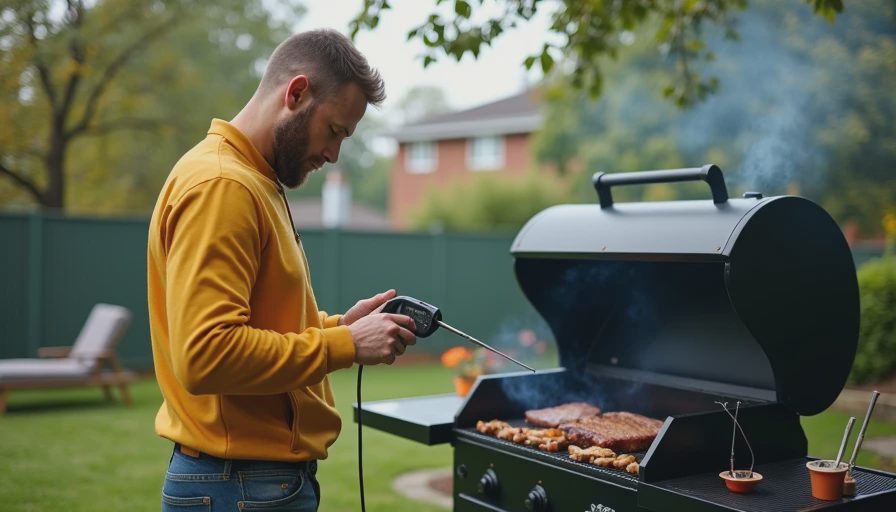
Even the best thermometer for smoker cooking can give you a bad answer if the probe is in the wrong place. The built-in gauge on many smokers sits high on the lid, while your brisket may be several inches below it. Heat rises, and the reading near the lid can be noticeably different from the grate temperature.
Clip the chamber probe to the cooking grate near the meat, but do not let the tip touch metal. Metal can transfer heat directly to the sensor and create a reading that is higher than the surrounding air. Keep the probe tip about an inch from the food so it measures the space your food actually occupies.
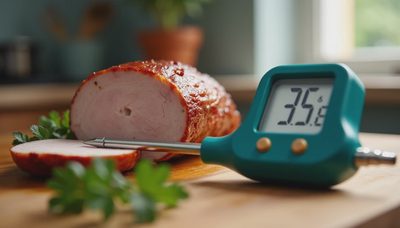
For meat, slide the probe into the thickest section and avoid large fat pockets or bone. With brisket, check the flat rather than relying on the point, which contains more fat and can feel tender sooner. For a pork shoulder, place the probe from the side into the center. Chicken is less forgiving: check the thickest part of the breast and the inner thigh without touching bone.
I usually put one probe in the thickest meat and one in the pit. On a long brisket cook, I may add a second meat probe because one end of the flat can finish several hours before the other.
Instant-read or leave-in thermometer?
An instant-read thermometer is fast and excellent for checking several spots near the end of a cook. ThermoWorks Thermapen models are well-known for quick readings, while the Lavatools Javelin is a popular lower-cost option. These tools are not designed to stay in the smoker, so keep them out of direct heat and use them when you lift the lid briefly.
A leave-in unit stays connected throughout the cook. ThermoPro, Inkbird, and ThermoWorks all sell versions with one to four probes. A basic ThermoPro setup can be a practical starting point for a new pitmaster, while an Inkbird wireless model can make a long overnight cook easier to monitor from the kitchen.
My advice is simple: buy an instant-read thermometer first if you have nothing. Add a leave-in probe later when you want less lid opening. The most expensive thermometer for smoker cooking is not automatically the smartest purchase; a $35 tool used correctly beats a $120 tool whose probe is dangling against the grate.
How accurate should it be?
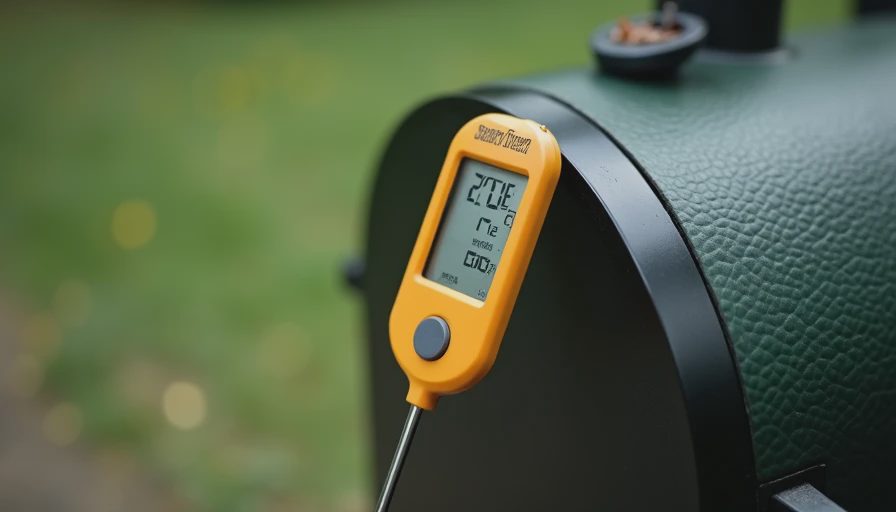
Accuracy matters, but you do not need laboratory equipment for backyard barbecue. A reading within a few degrees is generally useful when you are managing a smoker. More important is consistency. If a probe reads 8 degrees low every time, you can learn its behavior. If it jumps around or gives a different answer each minute, it is difficult to cook confidently.
Test new equipment in ice water and boiling water. Ice water should be close to 32 degrees Fahrenheit, while boiling water is about 212 degrees at sea level. Boiling temperature changes with elevation, so the ice-water test is the easier everyday check. Stir gently, keep the probe away from the container, and allow the display to settle.
Do not test a meat probe by putting it directly into a roaring fire. That can damage the cable or sensor. After each cook, wipe the probe with a damp cloth and mild soap. Keep the connector dry, coil the cable loosely, and replace probes that show cracked insulation or erratic readings.
Reading temperature without chasing a magic number
A thermometer for smoker cooking tells you what is happening, but tenderness decides when many large cuts are finished. Pork shoulder often becomes tender somewhere around 195 to 205 degrees Fahrenheit, while brisket may be ready in a similar range. Those numbers are guides, not a finish line. If the probe slides into the meat like softened butter, start checking for doneness.
Ribs work differently. Their thin shape makes an internal reading less dependable, so use color, bend, and the feel of a toothpick between the bones. Chicken should reach a safe internal temperature, with 165 degrees Fahrenheit being the standard minimum for poultry. Use the thermometer in several spots because thickness varies.
Let brisket and pork rest before slicing. A wrapped rest in a cooler or turned-off oven can give the juices time to settle, but do not seal dangerously hot food in an insulated space for an excessively long period. I prefer tracking both temperature and texture in my spiral smoke notebook. That record teaches more than buying another gadget.
A practical buying checklist
Before ordering a thermometer for smoker cooking, check five things: probe count, maximum temperature rating, cable length, display readability, and replacement-probe availability. Replacement probes matter because cables eventually suffer from repeated lid closing and hot grease. A model with inexpensive replacement parts can cost less over several seasons.
For a first smoker, spend about $25 to $50 on a dependable dual-probe unit and $20 to $50 on an instant-read thermometer if your budget allows. Families cooking occasional ribs do not need four probes and an app. Someone smoking multiple briskets for a neighborhood gathering may appreciate four channels and a wireless receiver.
Before the weekend cook, test the probes, label which channel is pit and which is meat, and confirm the batteries. During the cook, watch trends instead of panicking over every two-degree swing. Adjust one vent or add one small piece of fuel, then wait long enough to see the result. That calm rhythm is how you turn equipment into barbecue skill.
A thermometer for smoker cooking will not rescue an overloaded firebox or a dry brisket by itself, but it removes the biggest source of guesswork. Buy a reliable basic model, place the probes carefully, verify it occasionally, and let the cook tell you what it needs. Keep the process simple, take notes, and trust the method: low and slow, and don't overthink it.

No letters yet — be the first to write.