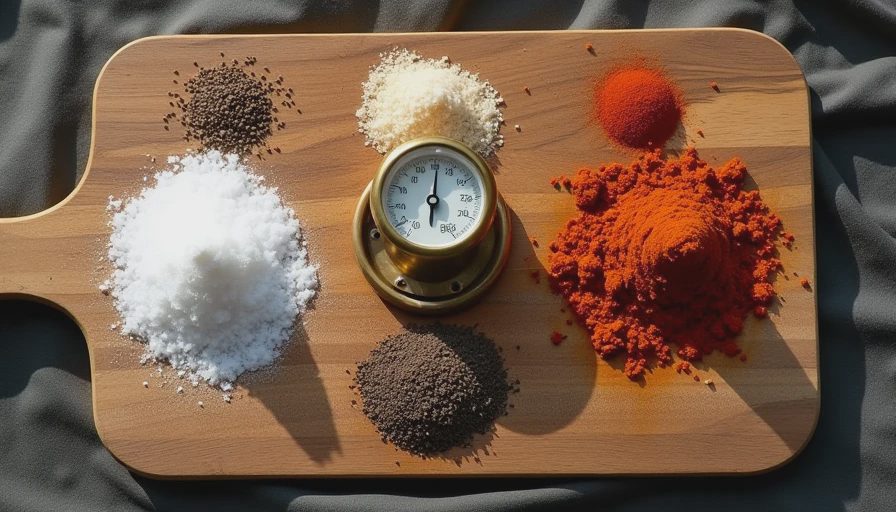
I spent my first two years of backyard smoking buying rubs.
I'm not exaggerating. I had a cabinet in my kitchen that was basically a graveyard of half-used spice blends. Some were fancy. Some were from competition teams. Some had names like "Angry Cow" and "Swine Lightning" and cost eighteen bucks for a tiny shaker. I bought them all. I convinced myself that the secret to good barbecue was hiding in one of those little jars.
Here's the part where I tell you I'm an idiot.
The truth is, you can buy all the rubs you want. You can spend a hundred bucks on boutique blends that come in burlap bags with handwritten labels. But the difference between a good rub and a great rub? It's not about the secret ingredient. It's about the ratio. And the math is embarrassingly simple.
The Golden Ratio: 2 Parts Salt, 1 Part Sugar
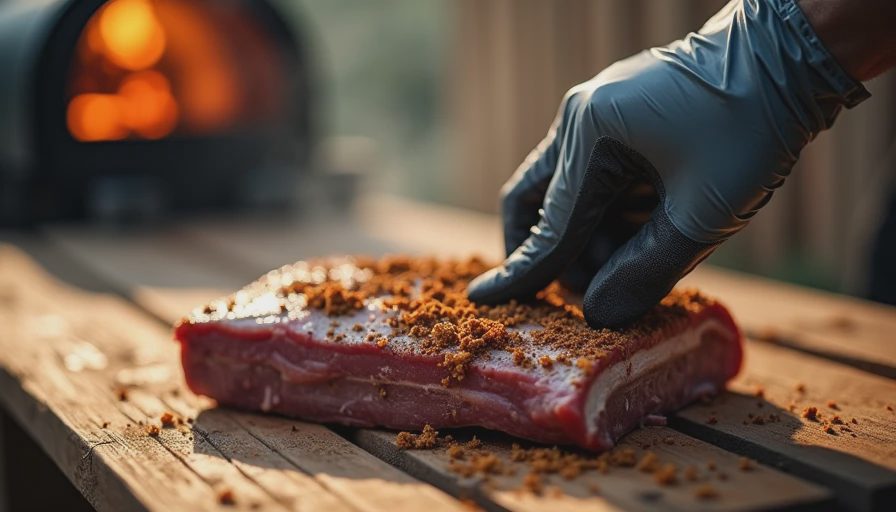
I first heard this from a guy at a KCBS competition. He was an older pitmaster from Arkansas, had been cooking for forty years, and he told me something that stuck: "Salt is the driver. Sugar is the passenger. If they don't get along, you're going nowhere."
He was talking about ratios. The basic formula that he used for everything — brisket, pork, chicken, you name it — was two parts salt to one part sugar. That's it. That's the math. It doesn't matter whether you're using kosher salt, sea salt, or plain old table salt (though I recommend Diamond Crystal kosher for its texture). And it doesn't matter whether you're using white sugar, brown sugar, or turbinado. The ratio is the same.
The salt is your workhorse. It penetrates the meat, seasons it from the inside out, and draws out moisture that helps form that beautiful bark. It's the foundation. Without enough salt, everything else is just dust on the surface.
The sugar is your finisher. It caramelizes on the surface, adds color, balances the salt, and gives you that sticky, lacquered bark that catches the light. Too little sugar, and your bark is pale and harsh. Too much, and it burns before the meat is done.
The Competition Lesson
I learned this the hard way at my second competition. I had spent a week building a custom rub. I had paprika, garlic powder, onion powder, cumin, chili powder, and a dash of something I found at a spice shop that smelled like a campfire. I was proud of it. I thought I was a genius.
I rubbed that brisket like it was a winning lottery ticket. I smoked it for fourteen hours. I wrapped it in butcher paper. I rested it for two hours. I sliced it.
And it tasted like a salt lick.
I had oversalted it so badly that the judges probably took one bite and reached for their water cups. The bark was dark and pretty, but the flavor was unbearable. I came in near the bottom of the pack, and I earned every bit of it.
When I got home, I looked at my recipe. I had been so focused on adding "interesting" flavors that I had completely botched the salt-to-sugar ratio. I had used about three parts salt to one part sugar — and I had also added salty ingredients like garlic salt and celery salt on top of that. It was a disaster.
That's when I went back to basics.
The 2:1 Formula in Practice
Here's how I do it now. This is the base recipe that works for everything.
The Base Rub:
2 parts kosher salt (I use Diamond Crystal)
1 part coarse black pepper
1 part sugar (I use turbinado for brisket, brown sugar for pork)
That's it. For brisket, I go with that exact mix, and I stop there. Salt, pepper, and a little sugar. It's the Texas-style approach, and it lets the meat speak for itself.
For pork ribs or pork butt, I start with the 2:1 salt-to-sugar ratio and then add:
2 parts paprika (for color and sweetness)
1 part garlic powder
1 part onion powder
½ part cayenne (if I want a little heat)
So a full pork rub might be: 2 parts salt, 2 parts brown sugar, 2 parts paprika, 1 part black pepper, 1 part garlic powder, 1 part onion powder, and half a part cayenne.
The key is that no matter what else I add, the salt and sugar are always in balance. If I add two parts paprika, I'm not changing the salt-to-sugar ratio — I'm just layering other flavors on top of it. The salt stays at two. The sugar stays at one (or two, if I'm doing a sweeter pork rub). The foundation doesn't move.
This is the math I wish someone had told me on day one. It's not complicated. It just requires discipline.
Don't Be Afraid of the Crystals
One thing I used to get wrong: I was afraid of salt. I thought it would dry out the meat or make it too salty. So I'd go light on it, then add more later. The result was meat that tasted under-seasoned on the inside and only surface-level on the outside.
Salt doesn't just sit on the surface. It diffuses into the meat over time. That's why you want to rub your brisket or pork butt a good 12 to 24 hours before you smoke it. The salt has time to do its work, breaking down proteins and absorbing into the muscle fibers. The sugar stays on the surface and helps with bark formation. They have different jobs, and they're both important.
If you're using the 2:1 ratio and you're worried it's too much, I get it. I used to think the same thing. But trust me — meat can handle a lot more salt than you think, especially when you're smoking a brisket or a pork shoulder that's going to cook for 12 hours and lose a third of its weight in water. That salt is going to ride along, seasoning every bite.
The Takeaway
Buying fancy rubs is fun. I still buy them sometimes, because I like the labels and the names and the stories. But when I want to cook something I'm proud of, I go back to the math.
Two parts salt, one part sugar. Build from there. Add your paprika, your chili powder, your cumin — whatever makes you happy. But keep that ratio intact. It's the reason your bark sets up the way it does. It's the reason the meat isn't bland. It's the reason you get a smoke ring that looks like it belongs in a magazine.
Low and slow, and don't overthink it. But when you're measuring your rub? Overthink that. A little.

No letters yet — be the first to write.